
- News
- City News
- bengaluru News
- Unlearn and unschool: Ladakhi innovator’s message to students
Trending
This story is from November 21, 2017
Unlearn and unschool: Ladakhi innovator’s message to students
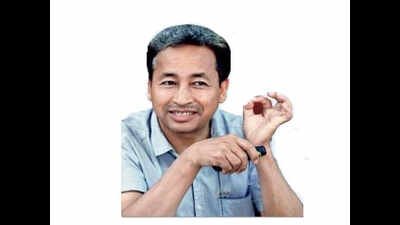

What’s new about your alternative educational projects in Ladakh?
After running SECMOL School, now we want to provide the same model at a higher-education level. Youngsters are extremely capable of solving problems and working constructively towards solutions. At the school level, children are running their own campus, then why not allow them to run enterprises within the university itself?
In the university, each department will have its own attached enterprise. For example, the education department will manage a few schools, while the department of hospitality and tourism will run a couple of hotels. Similarly, all of our other projects will also come under the university — like artificial glaciers and environmental restoration. The varsity should be up and running by 2018 with about 20 students to begin with. We aim to scale it up by at least 5,000 students by the end of 10 years.
Why is it a challenge to allow students to unlearn? What can governments do?
The problem is that our system is bogged down with rigid lines. We have been told time and again that the system is what we should follow and we are afraid to do things differently. During the 80s and 90s, students in Ladakh were part of an alien system of education — sitting in a line outside their school, memorizing answers in a language they didn’t even know. In course of time, we also earned the right to come out and try different things. It’s not easy, but I want to
appeal to governments to incorporate innovation and experimentation, not just beside the regular curriculum but at the crux of it. Students must unlearn and undo to realize their innovative spirit.
Even you were a part of the conventional education system both in school and college. How did you unlearn?
I’m not very sure how that happened. Sometimes, the system takes over and you give in. Sometimes, you rise above. I don’t know when it happens, but I feel my rural upbringing spared me of this regiment of obeying and not questioning. I grew up questioning and also got into trouble for that. But it was worth it at the end.
You were homeschooled until the age of nine. What do you think about today’s homeschooling system and how successful is it?
My homeschooling was not the kind where parents take books and teach children. It was an organic, rural homeschooling which could also mean ‘unschooled’. I got lucky because my mother could teach. While the idea of homeschooling is good, it may not be very feasible today for parents who have full-time jobs. Having said that, education shouldn’t be restricted to educators or teachers. Parents and family members must be trained to impart education to their children, irrespective of whether or not they are sent to school.
What’s your message to millions of students across India?
Unlearn, unschool, think on your own and don’t derive from others’ formulae.
End of Article
FOLLOW US ON SOCIAL MEDIA






Hot Picks
TOP TRENDING
Trending Stories
In City
Entire Website
- 'Osama's 'dead son' is alive, leading al-Qaida in Afghanistan and has terrifying plans'
- Diljit Dosanjh’s Dil-Luminati India Tour: Check dates, venue, how to book concert tickets online
- Hamster Kombat Daily Cipher Codes and Combo Cards for September 13, 2024: Unlock up to 1 million coins
- Narayana Murthy faces backlash for parenting remarks on social media; users say, "after working 72 hours a week, there’s barely time left to have babies…”
- Shreyas Iyer comes out to bat wearing sunglasses, falls for a duck in Duleep Trophy
- iPhone 16 will be available for Rs 54,900 on Apple website; here's how you can grab the deal
- iPhone 16 to go on pre-order today: Pre-booking details, time, sale date and more
- Vande Metro launch date, schedule: PM Modi to flag off Bhuj-Ahmedabad Vande Metro train; check timings, stoppages of new Indian Railways train
- Why around 40,000 TCS employees have received tax demand notices for Rs 50,000 to over Rs 1 lakh
- Bill meant to usurp Waqf land, JPC told
- Troops disengaged in 4 areas, including Galwan valley: China
- Encounter breaks out between security forces and terrorists in J&K's Baramulla
- Will Germany’s suspension of Schengen entry end the Europe dream?
- Tamil Nadu hotelier’s apology to FM over GST remark triggers row
- 'Water reached tomb of Shahjahan': Leaking from Taj Mahal's dome
- Ind vs Pak: Why is India hot favourite for the ACT hockey match
- How Swift is uniting the sisterhood to stop Trump's second coming
- Infosys founder Narayana Murthy: My wife's logic was ...
- Fake police make woman lawyer strip on video call in Mumbai
- 'Lessons learned': Stranded astronauts Sunita Williams and Butch Wilmore on Boeing's return to earth

Popular Categories
Hot on the Web
Top Trends
Moin KhanShreyas IyerWhere to Watch IND vs PAK Hockey MatchShannon Sharpes Net WorthVande MetroAadhaar Card UpdateTech LayoffsShannon SharpeUPSC Mains Admit CardKristina JoksimovicWay Chatgpt can be your Study PartnerAir Taxi IndiaAyushman Bharat SchemeKolkata Doctor Rape CaseDonald TrumpDiljit DosanjhLive Cricket Score
Trending Topics
Alia BhattMalaika Arora Father DeathArbaaz KhanNatasa StankovicMr Bachchan OTT ReleaseNational Parks In IndiaSelena GomezGOAT CollectionVikas Sethi DeathMalayalam ProducersIndia's Best Dancer 4Simi GarewalDilli BabuIndian National ParksLaung BenefitsVikas SethiApple iPhone 16SpaceXAadhar Card Update By Sept 14Wordle Answer
Living and entertainment
Latest News
Regina Cassandra calls herself a 'serial dater,' had many relationships :'But I’m taking a break now'Kaun Banega Crorepati 16: Can you guess the answer for this Rs 3,20,000 question on Navy, which contestant Naman Jain incorrectly answered?Exclusive - Has Palak Sindhwani aka Sonu from Taarak Mehta Ka Ooltah Chashmah breached her contract; Neela Film Productions to issue a legal notice to the actress?Mexico's president asks Sinaloa cartel to act 'responsibly' as violence escalates in the northKitchen Tips: How to elevate home cooking to Michelin levelFord drives into India for 3rd timePIL: Publicise laws, penalties to curb crimes against womenGrowth potential 7.5% or more: RBI governorHindus take to Bangladesh streets to stop attacks and demand justiceE-commerce speeds up to catch up with Quick commerce'Will take digital public infrastructure stack to 50 nations'Justin Timberlake faces DWI charges: Court-ordered apology, fine and community serviceTragic road accident on Mogili ghat road claims seven lives in Chittoor districtSebi gives clean chit to NSE, ex-executives in co-location caseRusty or Ready? Falcons' Cousins Falls Flat in $180M NFL DebutEdible oil import duty hiked by 20%Preschools turn nursing homes, retirement age raised: China's demographic crisis explodesBest Phones Under 35000 To Smoothly Carry Out Multiple Tasks On A Budget
Copyright © 2024 Bennett, Coleman & Co. Ltd. All rights reserved. For reprint rights: Times Syndication Service